
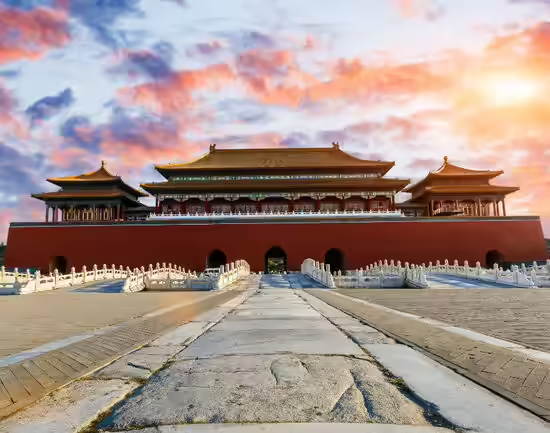
The Forbidden City is one of the world’s most intact imperial governance complexes—an architectural system purpose-built to centralize power, ritual, and administration for nearly five centuries. Rooted in Confucian order and executed with unparalleled craftsmanship, it remains a masterclass in how tradition can scale into enduring state infrastructure.
| Attribute | Details |
|---|---|
| Location | Beijing, China |
| Constructed | 1406–1420 |
| Dynasties Served | Ming & Qing |
| Founding Emperor | Yongle Emperor |
| Total Area | ~720,000 m² |
| Structures | ~980 buildings |
| Rooms | ~8,700 |
| Current Function | Palace Museum |
| UNESCO Status | World Heritage Site (1987) |
The former Chinese imperial palace from the Ming dynasty to the end of the Qing dynasty.
Today, operating as the Palace Museum, the Forbidden City has been repositioned as:
-
China’s most valuable cultural asset
-
A high-volume yet controlled heritage tourism operation
-
A living archive of imperial art, artifacts, and governance philosophy
 No products in the cart.
Aurora –
The Forbidden City is a historic palace complex in Beijing, China.
It was the imperial residence of Chinese emperors and is famous for its traditional architecture and cultural treasures.